
9 hr 30 min
Tokashiki Island Day Escape from Naha
Hassle-free island getaway with boat transport, beach shuttle, lunch, and optional turtle snorkeling.
Reserve
Hand-picked by our editors — only the best 5 experiences from 18 reviewed.
Verified partners for every tour, free cancellation where available, and instant confirmation on every booking.
9 hr 30 min
Hassle-free island getaway with boat transport, beach shuttle, lunch, and optional turtle snorkeling.
Reserve
7 hr
Explore pristine coral reefs and search for sea turtles across multiple snorkeling sites in protected waters
Reserve
9 hr
Full-day marine expedition to pristine coral reefs with lunch, gear, and hotel transfers included
ReservePrices from verified partners. Availability updates in real time at checkout. Free cancellation policies apply where shown.
The landmarks, rooms, and views travelers on this tour remember — all visible on a single visit.
A world-famous beach known for vibrant coral reefs and abundant tropical fish.
A famous drift diving site off Zamami Island for experienced divers.
An expansive cavern featuring schools of silver sweepers and natural light.
A known manta ray cleaning station and sea turtle habitat.
A pristine white sand beach perfect for relaxing between dives.
They complement each other; most visitors who do both call the Kerama Islands diving tour the superior choice for open-water wildlife, while the Blue Cave is preferred for unique geological lighting. Selecting the right underwater excursion depends on whether you prioritize coral ecosystems or specialized cavern environments.
| Feature | Top pick Kerama Islands | Blue Cave (Onna) |
|---|---|---|
Marine biodiversity |
High; diverse coral reefs | Moderate; reef fish focus |
Cave/Grotto experience |
None; open water | Yes; natural azure cavern |
Travel distance from Naha |
approx. 40-60 minutes by boat | approx. 60-90 minutes by car |
Skill level required |
Beginner to advanced | Beginner-friendly |
Current/Water conditions |
Variable; open ocean | Generally calm inside cave |
| See tickets → |
Verdict: Choose the kerama islands diving tour tours for expansive visibility and marine life, or select the Blue Cave for a concentrated, atmospheric dive near the coast; kerama islands diving tour tickets and kerama islands diving tour tour options are available daily.
Choose your ticket, select your date, and reserve in under two minutes. Secure checkout handled by our verified partner.
Instant confirmation by email, with a mobile voucher you can save offline. No printing, no queuing at a collection desk.
Arrive at the entrance, show your voucher on your phone, and walk in. Most tickets include priority or skip-the-line access.
Practical details for your visit straight from our verified partners — hours, access, rules, and how to get there.
Wear swimwear, a rash guard, and comfortable clothing suitable for a boat environment. Bring a change of dry clothes for the return trip.
Keep personal belongings in a waterproof bag. Security checks may occur at the Naha port before boarding your ferry.
Underwater cameras are recommended to capture the marine life. Most operators provide free photo services during your kerama islands diving tour.
Boats vary in accessibility; guests with mobility concerns should verify pier conditions before booking a kerama islands diving tour.
Many operators provide specialized gear for children and family-friendly boat layouts. Ensure participants meet age requirements for a kerama islands diving tour.
Lunch is included in many full-day packages. Carry reusable water bottles to stay hydrated during your kerama islands diving tour.
Best time to go, insider tips, nearby landmarks, and the cancellation fine print — flip through to skim what matters to you.
Flexible, no hidden fees.
Full refunds are typically available if tours are cancelled due to weather conditions. Please check your specific operator's policy regarding the 0 JPY entrance fee.
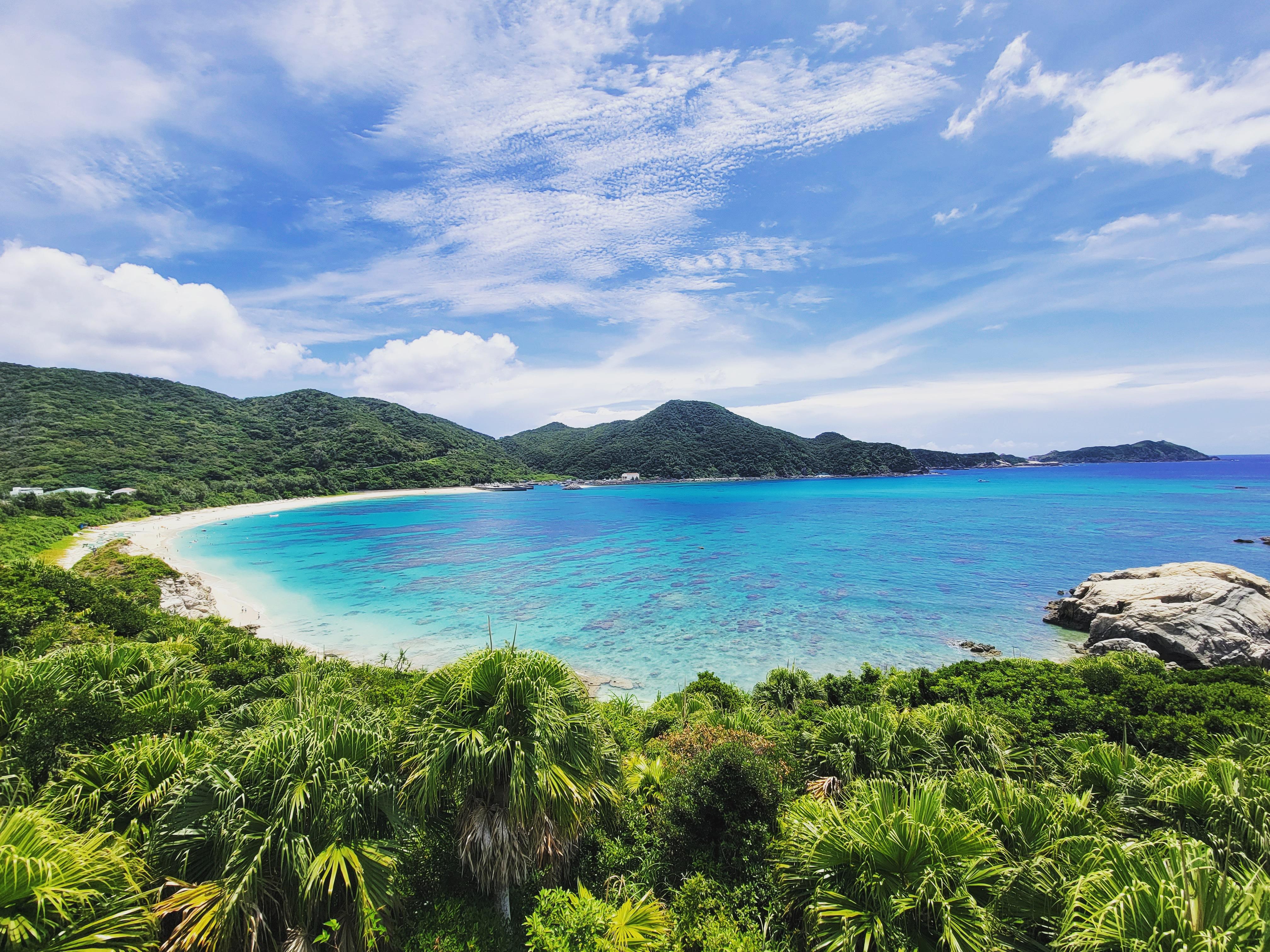
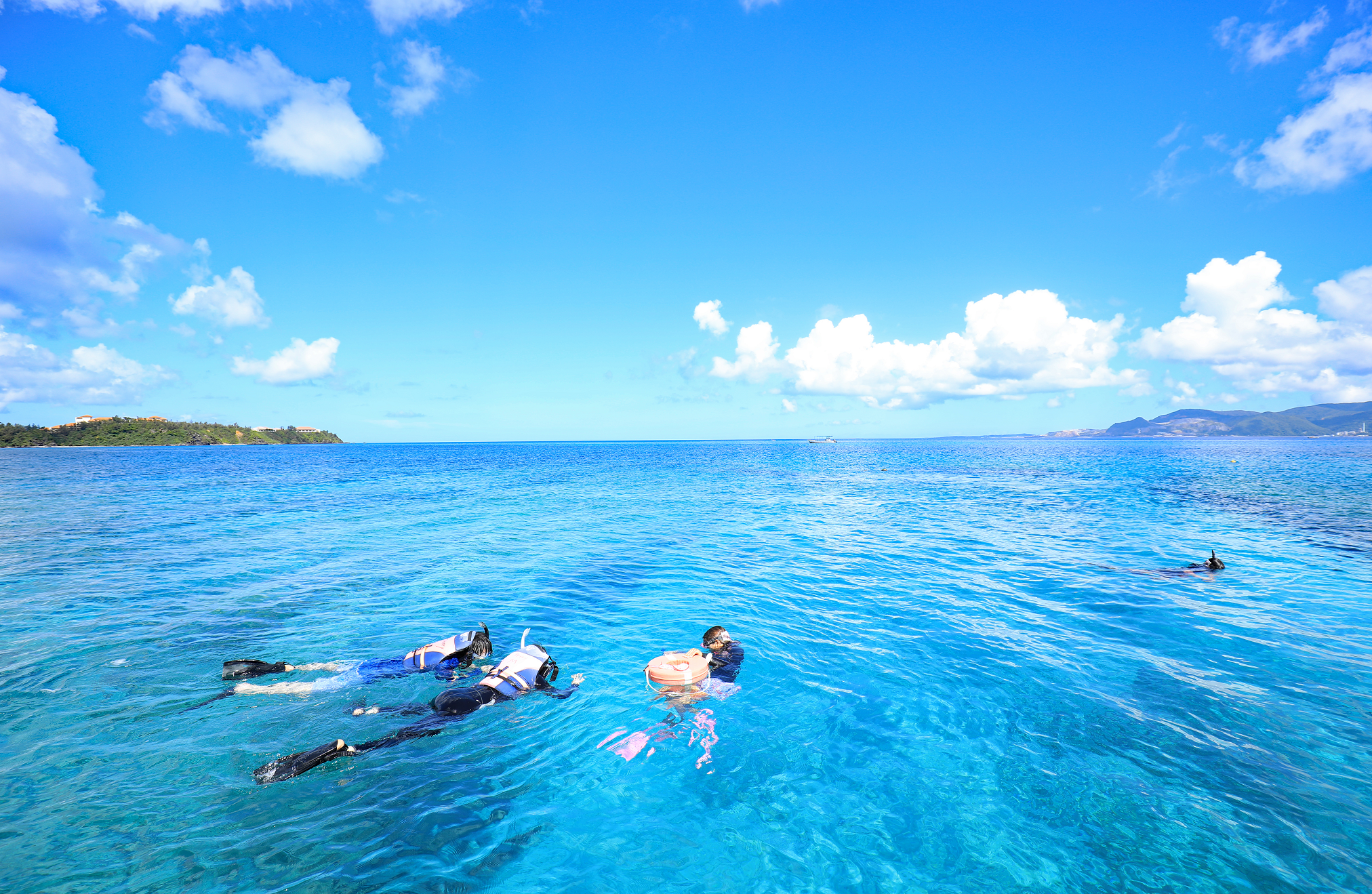
The Kerama Islands became Japan's thirty-first national park in March 2014, recognizing a coral ecosystem that hosts more than 250 species across twenty uninhabited islets and five inhabited atolls. Visibility in the Kerama Blue — the local term for the water's cobalt clarity — routinely exceeds thirty meters during the April-to-October season, conditions that draw marine biologists and recreational divers in equal measure. Green sea turtles nest on Tokashiki's western beaches between May and August, while hawksbill turtles patrol the drop-offs year-round. The archipelago lies thirty-five kilometers due west of Naha, a journey ferries complete in fifty minutes. The Keramashoto National Park designation protects 3,520 hectares of reef, lagoon, and coastal forest. Zamami Island's Ama Beach and Tokashiki's Aharen Beach anchor snorkeling circuits that traverse table coral gardens at depths of two to twelve meters. Beneath the surface, Acropora and Porites corals form terraces colonized by clownfish, parrotfish, and over sixty species of butterflyfish. The archipelago's geographic isolation — positioned between the East China Sea and the Philippine Plate — produces nutrient upwellings that sustain plankton blooms, which in turn support manta rays and seasonal whale shark sightings near Aka Island's southern shelf. Okinawa prefectural fisheries data from 2022 recorded a ninety-two percent recovery rate in hard coral cover following the 2016 bleaching event, a resilience marine ecologists attribute to the park's strict anchorage and fishing prohibitions. Day-tour operators now limit group sizes to fifteen per vessel under Environment Ministry guidelines issued in 2019. The regulations mandate briefings on fin technique and distance protocols around nesting turtles, measures that balance access with long-term reef health. A Kerama islands diving tour departs Naha's Tomari Port most mornings between seven-thirty and eight-thirty, timing designed to reach the dive sites before mid-morning currents strengthen. Full-day itineraries include two snorkel sessions, often pairing a shallow lagoon stop with a deeper reef wall, and a beach interval on Tokashiki or Zamami. The return crossing typically concludes by four in the afternoon, aligning with Naha's public transit schedules for onward connections.
"Visibility in the Kerama Blue routinely exceeds thirty meters during the April-to-October season, conditions that draw marine biologists and recreational divers in equal measure."
A step-by-step walkthrough of the visit — what you'll see, how long each stage takes, and the details that matter.
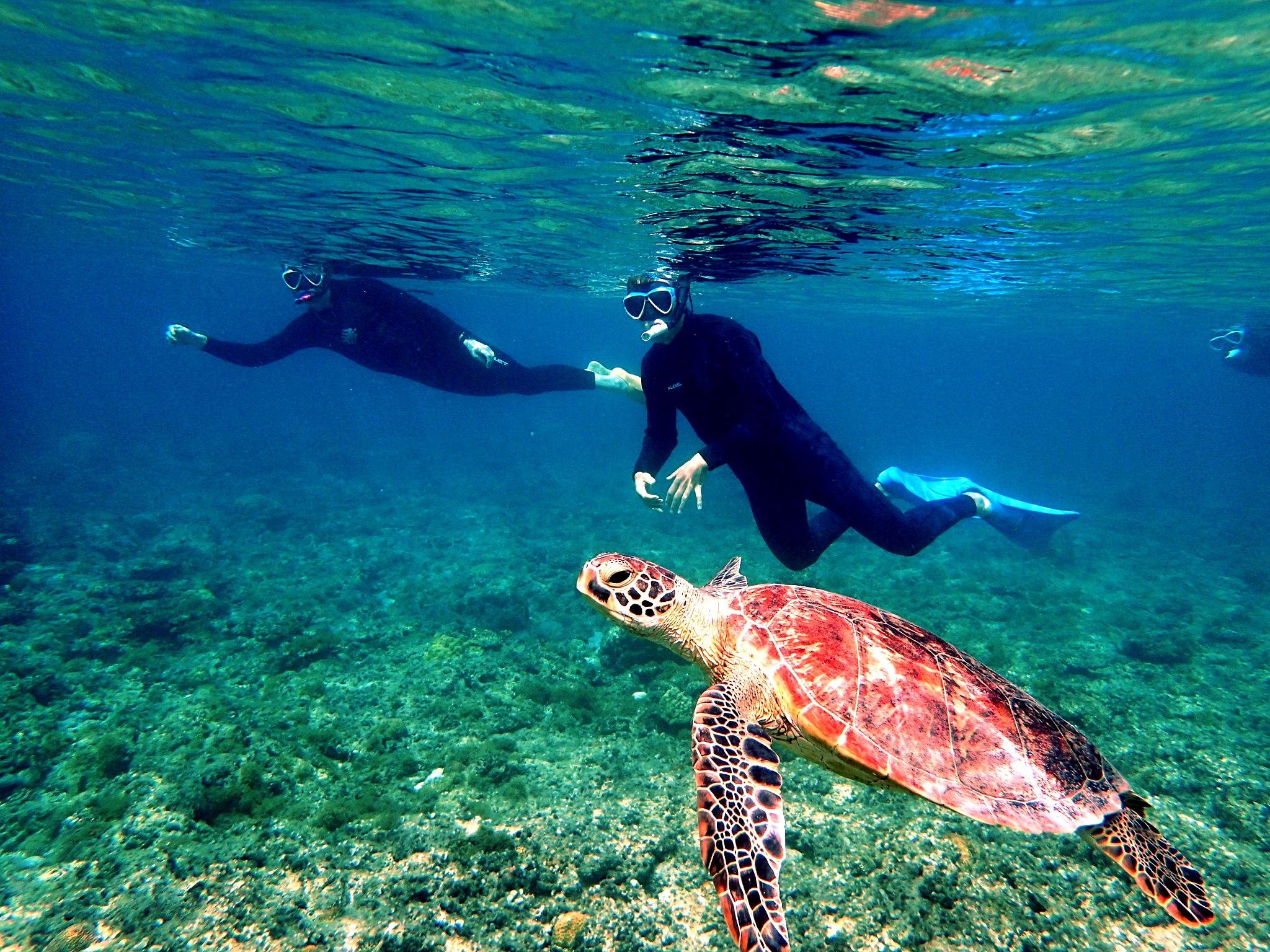
You board at Tomari Port while the harbor is still cool, the vessel a low-profile catamaran with bench seating and gear racks along the stern. The crossing takes fifty minutes, the skyline of Naha shrinking behind you as the water shifts from harbor green to open-ocean indigo. Zamami's silhouette appears first, then Tokashiki's ridgeline, both islands rising steeply from the sea with forested slopes that meet white-sand crescents at the waterline. Your first entry is off Aharen Beach, where the seafloor drops in terraces of staghorn coral and brain coral clusters. You float above schools of sergeant majors and blue-green chromis, the fish moving in synchronized clouds that part and reform around you. A green sea turtle glides past at three meters, its shell mottled with algae, flippers stroking in slow arcs. The guide signals toward a coral head where a pair of clownfish dart between anemone tentacles, their orange scales luminous against the reef's muted tans and greens. After an hour you return to the boat for a beach interval on Tokashiki, where you rinse gear and eat a boxed lunch under casuarina trees. The second dive relocates to a deeper site off Zamami's western point, a wall dive that follows a limestone ledge down to fifteen meters, the visibility so sharp you can count individual polyps on the coral fans below.
The Kerama Islands area is open Mon–Sun: 00:00–23:59.
There is 0 JPY entrance fee for the park; tours/activities have separate costs for your kerama islands diving tour.
Summer is the best season for your kerama islands diving tour due to optimal water visibility.
Take a ferry from Tomari Port in Naha for your kerama islands diving tour.
Yes, family-friendly operators exist for the kerama islands diving tour.
You can bring your own gear, but many operators include it in the price of your kerama islands diving tour.
Wear comfortable beachwear and bring a change of clothes for your kerama islands diving tour.
Contact your operator directly for refund details related to your kerama islands diving tour.
Yes, nearby islands like Tokashiki and Zamami are popular landmarks for your kerama islands diving tour.