
English| EUR
Suggested for you
More currencies
Choose a language
The Kerama Islands sit 30 kilometers west of Okinawa's main island, surrounded by some of the clearest subtropical water in the Pacific. Most dive operators run daily trips between 08:00 and 18:00, with morning departures capturing the calmest conditions. This guide explains when to dive, what you'll see below the surface, and how to book a licensed operator.
Quick answer
Kerama island diving experience operates daily from 08:00 to 18:00, with morning slots between 08:00 and 10:00 offering the best underwater visibility before afternoon wind shifts reduce clarity. There is no entrance fee to access the islands themselves; all diving requires booking through a private tour operator licensed to lead dives in the Kerama Islands National Park. Operators run trips year-round, though seasonal marine life and sea conditions vary significantly.
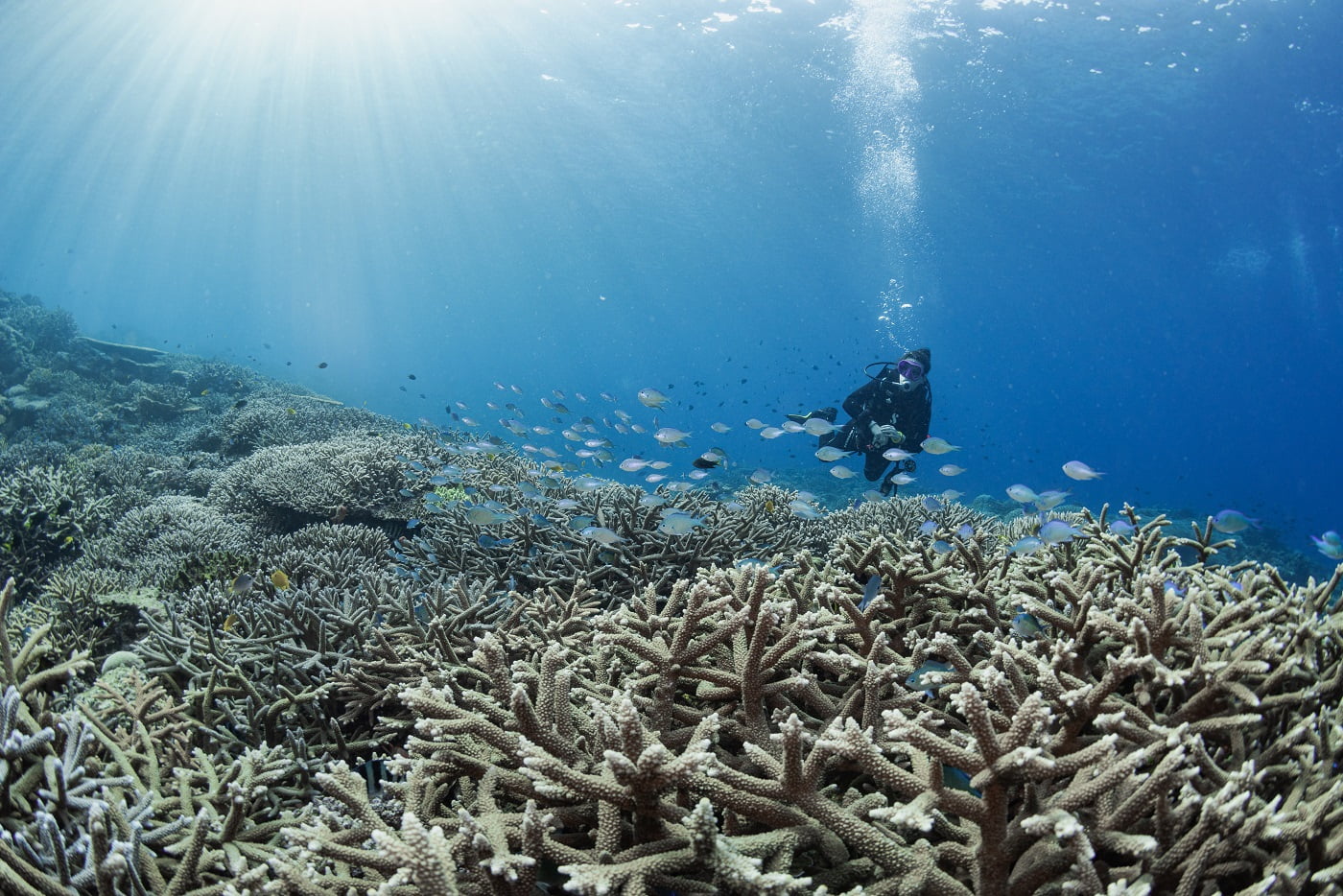
The Kerama Islands National Park was designated in 2014, protecting 3,520 hectares of coral reef systems and more than 250 documented species of hard and soft corals. Water clarity in the channels between Zamami, Tokashiki, and Aka islands regularly exceeds 30 meters, a figure that places the region among the most transparent dive sites in the Northern Hemisphere. That clarity stems from the Kuroshio Current, which sweeps warm, nutrient-rich water through the archipelago and sustains reef ecosystems dense enough to support sea turtles, manta rays, and seasonal humpback whale migrations. Dive operators based in Zamami-son and Tokashiki-son run both single-tank and multi-dive itineraries, departing from village harbors aboard small rigid-hull inflatables or larger cabin cruisers depending on group size and weather. Sites range from shallow coral gardens at five meters—suitable for newly certified divers—to drop-offs beyond 40 meters frequented by pelagic species during summer months. Water temperature holds between 21°C in February and 29°C in August, and most operators require at least an Open Water certification or equivalent for unguided dives. Snorkelers often join the same boats, anchoring above the reef while divers descend. Visibility peaks during the dry season from October through April, when wind speeds drop and plankton blooms recede. June through August brings warmer water and the highest diversity of tropical fish, but afternoon squalls can reduce clarity and shorten dive windows. Humpback whales pass through the Kerama channels between January and March, and operators occasionally offer whale-watching excursions alongside standard dive schedules. Most trips include all cylinder and weight equipment in the booking fee, though wetsuits, BCDs, and regulators are often rented separately. Booking three to five days in advance is standard practice during off-peak months; summer weekends and Japanese national holidays require at least two weeks' lead time. No dive operator maintains a permanent desk on the islands—reservations are handled via phone or online booking platforms, and meeting points are confirmed the evening before departure. Underwater navigation relies on natural landmarks rather than installed moorings, so guides choose sites based on real-time current and visibility reports rather than fixed itineraries. That flexibility allows operators to adapt to conditions, but it also means specific sites are never guaranteed.
“Water clarity in the channels between Zamami, Tokashiki, and Aka islands regularly exceeds 30 meters, placing the region among the most transparent dive sites in the Northern Hemisphere.”
The best arrival window is 08:00–10:00, as morning hours offer the best water clarity and visibility for diving before afternoon wind shifts. Planning your visit between April and October provides the most favorable sea conditions for underwater activities.
Warm, 23°C to 28°C
The rainy season begins in May; plan around weather patterns.
Hot, 28°C to 32°C
Typhoon season can occasionally impact maritime schedules and visibility.
Mild, 22°C to 27°C
Water remains warm with lower humidity and generally calmer seas.
—
Early arrivals maximize visibility and avoid peak weekend boat traffic.
Verdict: For the best conditions, aim for weekday mornings between April and October to ensure optimal water clarity and manageable crowd levels.
The Kerama Islands maintain consistent daily operational hours to support diving activities throughout the week.
There is no cost to enter the Kerama Islands. Diving experiences require booking a private tour operator, as fees are determined by the specific services and equipment provided by those vendors.
Verdict: A typical visitor pays 0 JPY for island access, while total costs for diving depend entirely on the private tour operator selected.
The Kerama Islands are located southwest of Okinawa Main Island and are accessible exclusively by ferry. Visitors must depart from Tomari Port (Tomarin) in Naha to reach the islands for their diving excursions.
Ferry from Tomari Port to Zamami Port
Ferry from Tomari Port to Tokashiki Port
Book your ferry tickets in advance, especially during peak travel seasons, as vessels can reach capacity. Once you arrive at the port, please proceed to your pre-booked private tour operator for your scheduled dive.
Complete these steps before your departure to ensure a smooth diving experience in the Kerama Islands.
Everything you need to know about kerama island diving experience
A successful kerama island diving experience requires coordination with a licensed local operator. Visitors should prepare for boat transit and follow all safety protocols provided by their instructors. Water quality in this region is recognized for high transparency, making it a popular destination for marine life observation.
Yes, booking with a professional dive shop is essential for access to the best reefs. These operators manage the logistics of transport and safety gear, as independent diving is not standard for casual visitors.
The best arrival window for diving is 08:00–10:00. These morning hours offer the best water clarity and visibility before afternoon wind shifts affect the surface conditions.
There is 0 JPY entrance fee for the islands themselves, as they are public territory. However, a private tour operator must be booked to facilitate any professional diving activity.
Participation age requirements for a kerama island diving experience vary by tour provider and specific activity type. Families should verify age limits and swimming ability prerequisites directly with the chosen operator before booking.
Specific equipment rentals are typically managed by the private tour operator you select. Since this is a guided experience, ensure you clarify what gear is provided in your chosen booking during the reservation process.
If weather or ocean conditions become unsuitable, tour operators will typically notify guests to reschedule or cancel. It is advisable to maintain contact with your provider to receive real-time updates regarding your scheduled trip.
Kerama Islands National Park Diving
Read more Tickets & toursKerama Island Dive Shops
Read more GuideHow to Get to Kerama Islands
Read more Tickets & toursKerama Islands Diving Tours
Read more Tickets & toursKerama Islands Diving from Naha
Read more GuideKerama Islands Dive Sites Guide
Read more